CHED policy
CMO 46, CMO 37 and the OBE Handbook, in plain language
Three CHED documents shape outcome-based education in Philippine higher education. Here is what each one asks, and what it means for your programs.
2 min read
Outcome-based education, made practical
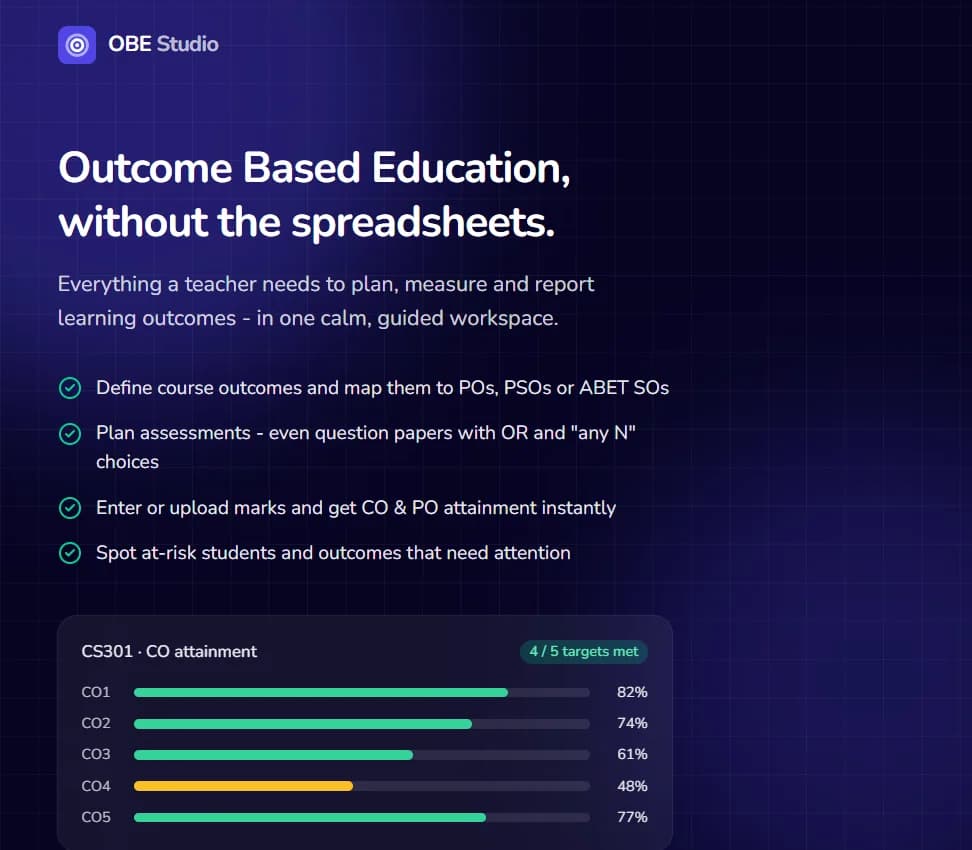
Outcome-based education starts with what graduates should be able to do, then aligns teaching and assessment to show whether they can. OBE Studio maps your outcomes, measures attainment and records every improvement, in one place.
Why it matters
Institutional leadership
A clear line from mission to assessed work, so priorities and resources follow evidence rather than assumption.
Quality assurance teams
Outcomes, mappings, results and improvement actions kept together, not compiled again for every review.
Deans and faculty
Explicit expectations for each course, and assessment evidence that points to the gap.
Learners
Knowing in advance what they are expected to do, and how their work will be judged.
CHED policy, simplified
The framework
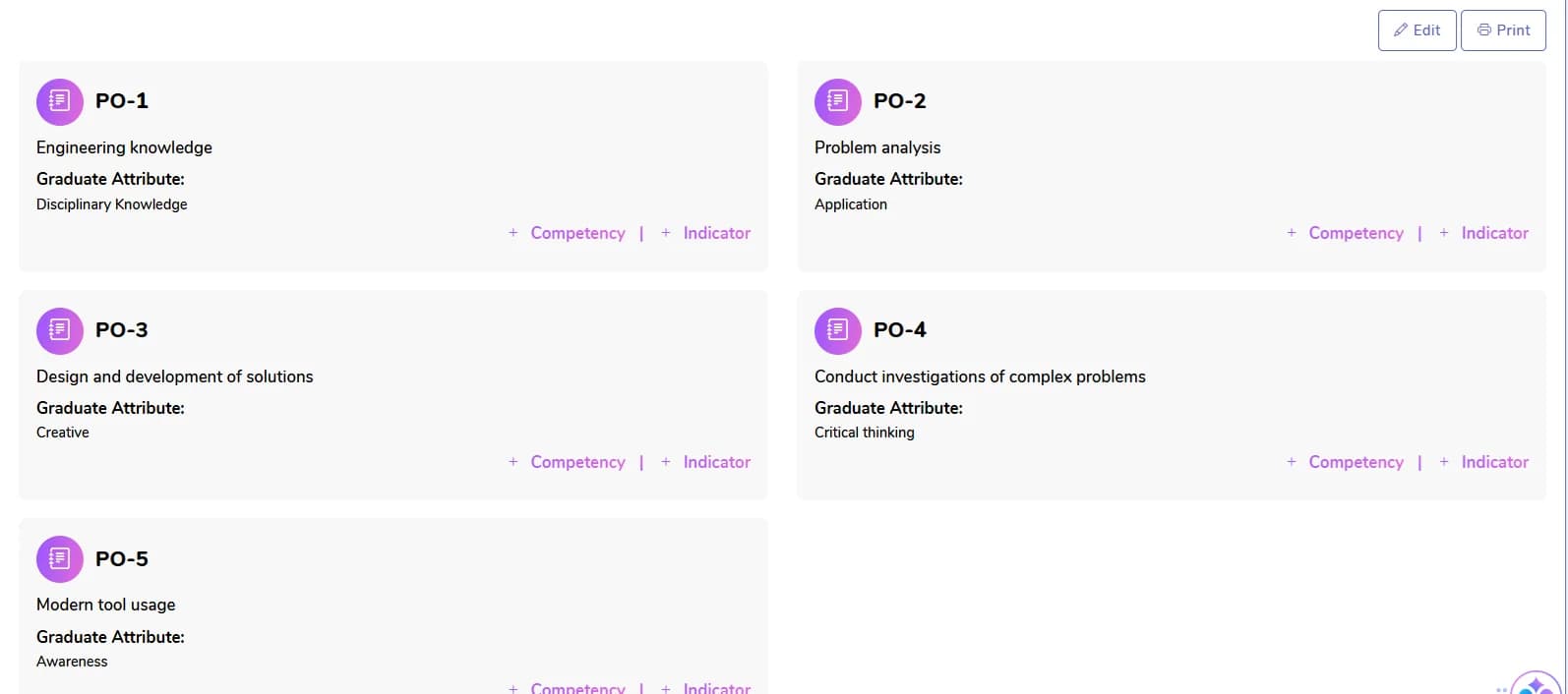
Institutional intent cascades into program outcomes, then course outcomes, then the tasks that reveal learning. Every assessment has a clear place in that chain.
Vision → PEOs → PLOs → CLOs → Assessment: every assessment maps to outcomes.
Adapted from the OBE workshop deck. Reference: CHED OBE framework. Labels vary slightly between program PSGs.
How OBE works
State what graduates and course completers should be able to do, in observable terms.
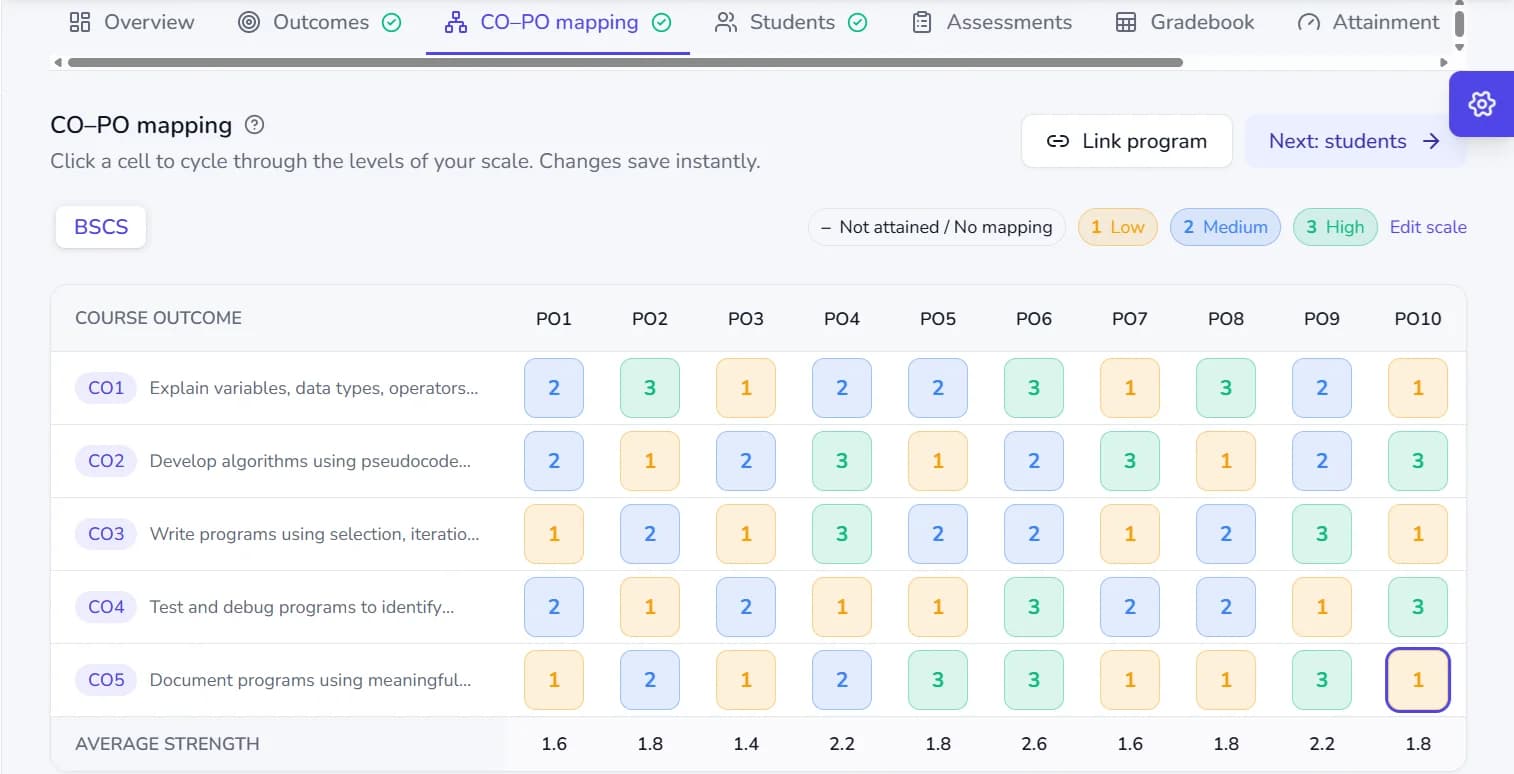
Map courses to program outcomes and design teaching activities that build each capability.
Use tasks and criteria that produce evidence for specific outcomes.
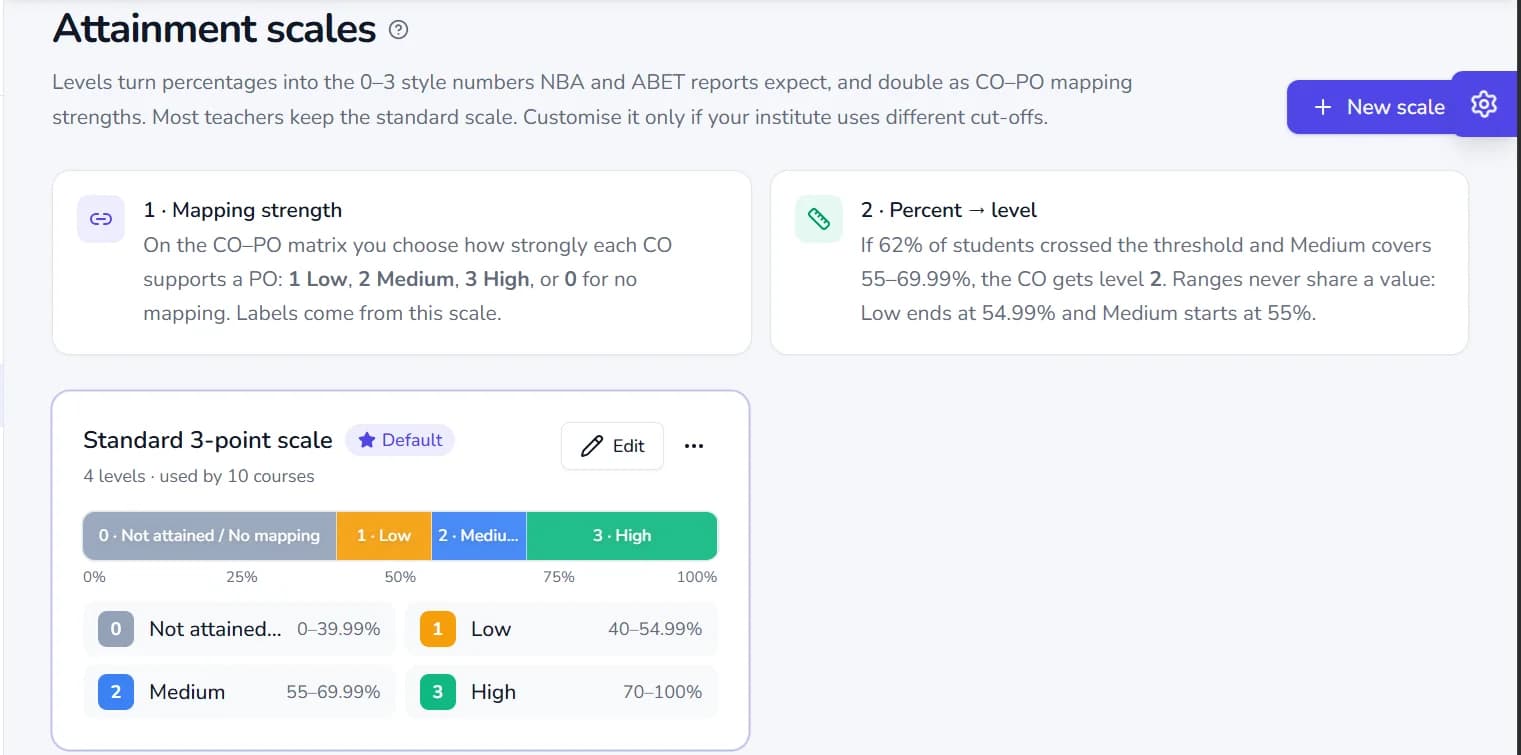
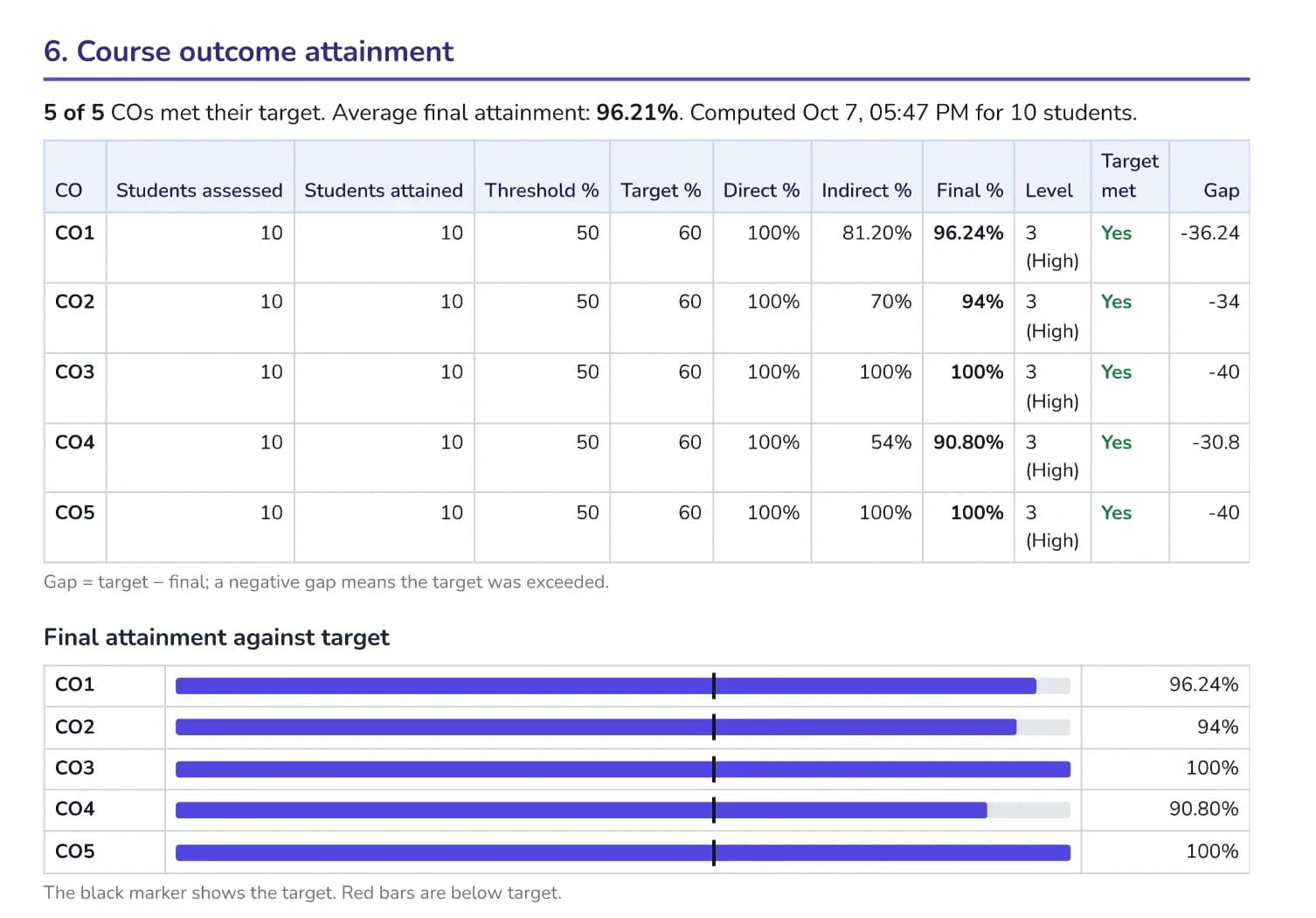
Compare attainment with targets to locate gaps by outcome, course and cohort.
Act on the gap, record who owns the change and reassess to see whether it helped.
OBE Studio in action
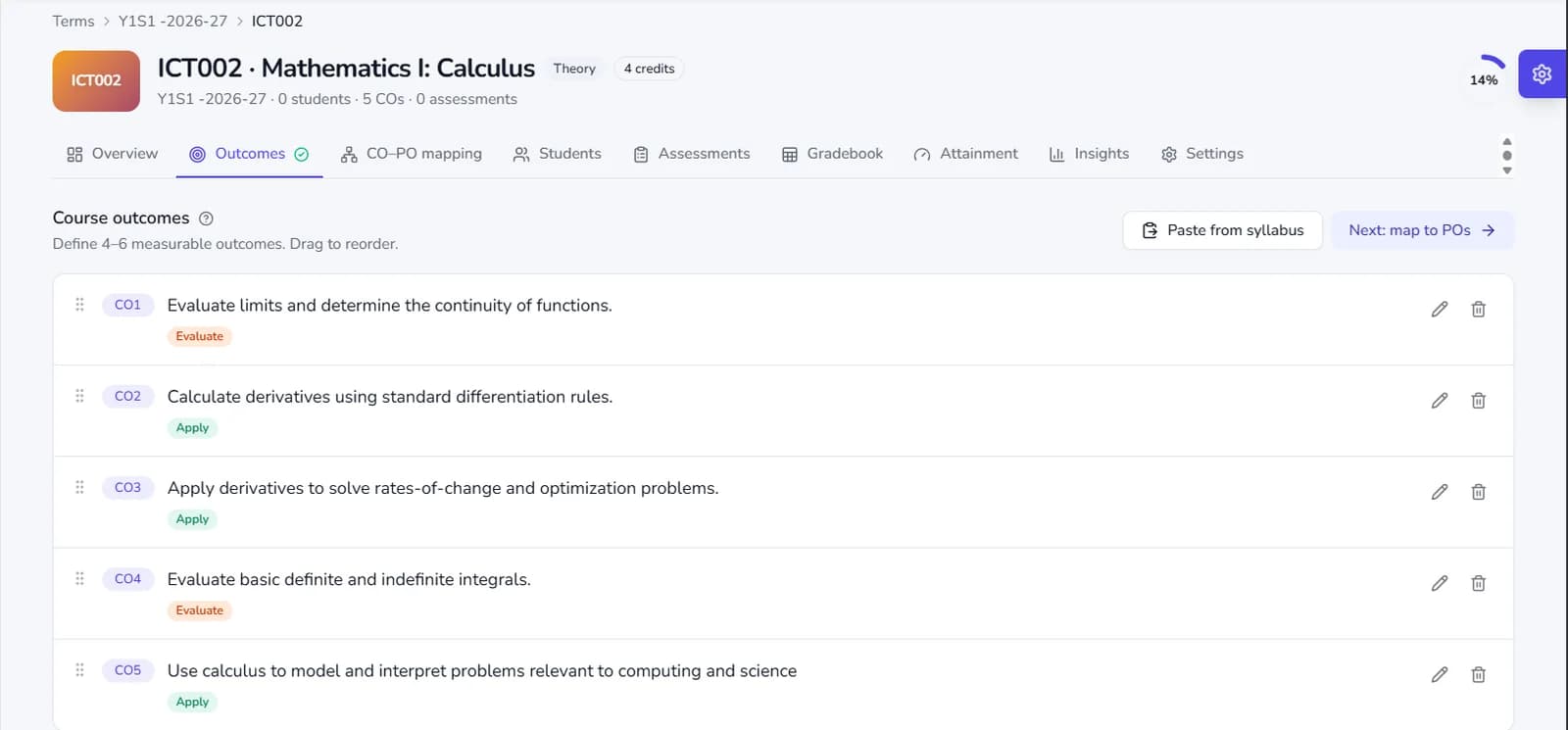
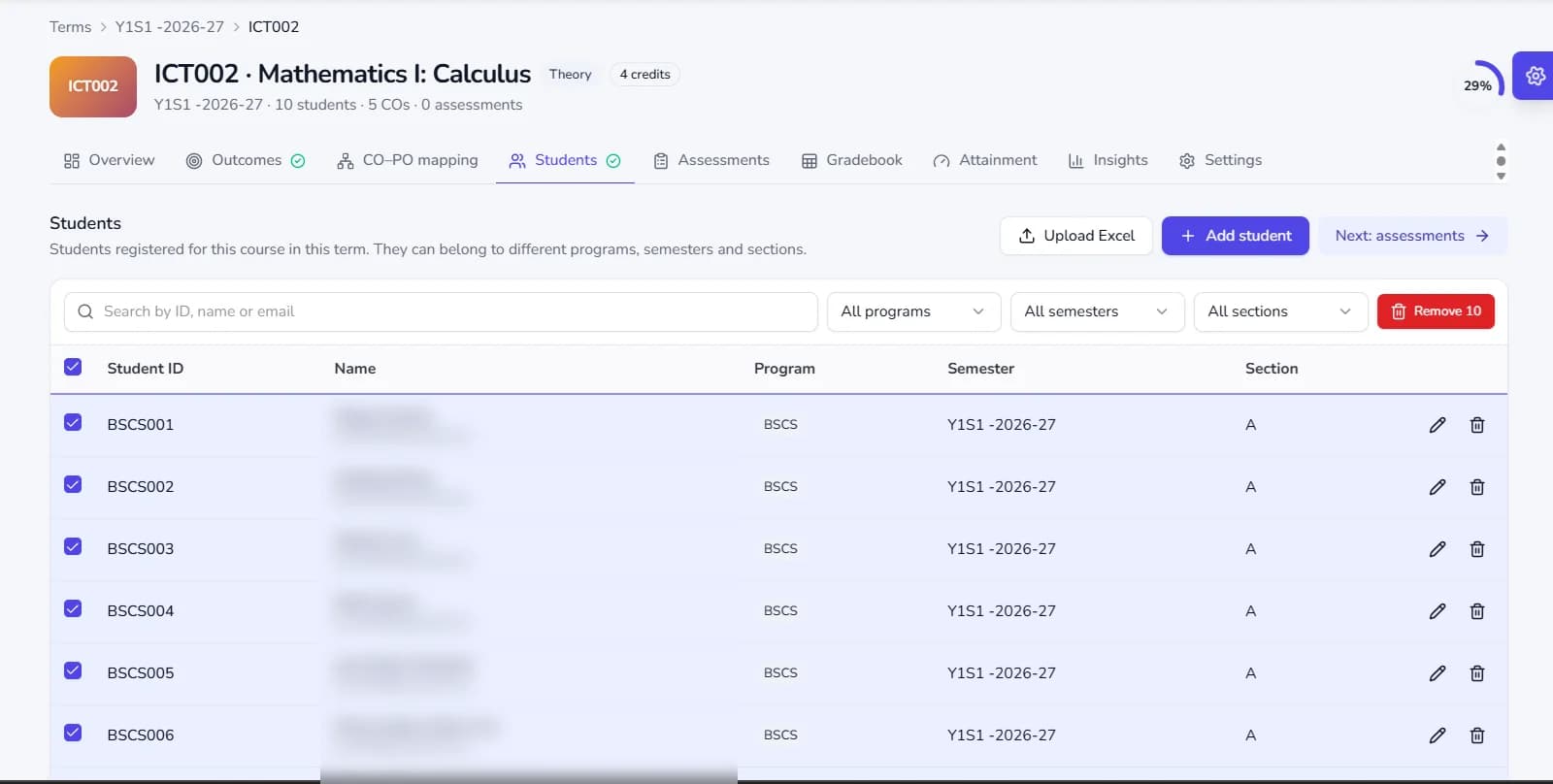
Faculty record four to six measurable course outcomes, each tagged with its Bloom’s level, or paste them straight from an existing syllabus.
Inside OBE Studio
Questions
Outcome-based education (OBE) designs a program backwards from what graduates should be able to do, then aligns teaching and assessment so the institution can show, with evidence, whether learners achieved it.
Read about OBECMO 46, s. 2012 is the policy: quality is what graduates can actually do. CMO 37, s. 2012 applies OBE to engineering programs in six repeating steps. The 2014 CHED Handbook is the playbook: it shows faculty how to cascade outcomes and keep every course aligned.
See the infographicsProgram educational objectives (PEOs) describe what graduates achieve a few years after graduation. Program outcomes (POs) describe capabilities at graduation. Course outcomes (COs) describe what a learner can do by the end of one course.
Explore the frameworkNo. Accreditation decisions are made by accrediting bodies against their own criteria. A platform can help organise evidence; academic judgement, sound mappings and genuine improvement remain the institution’s work.
From the blog
Three CHED documents shape outcome-based education in Philippine higher education. Here is what each one asks, and what it means for your programs.
2 min read
A learning outcome should be clear enough that two assessors could agree whether it has been shown. Use these five checks to get there.
1 min read
How assessed marks become a course outcome attainment level, and how course outcomes roll up to program outcomes, explained step by step.
2 min read
Free access to OBE Studio
Plan, measure and report learning outcomes in one guided workspace, without the spreadsheets, following the same chain CHED describes, from program outcomes to course outcomes to every assessment.
Free account · Works in your browser