Two memorandum orders from 2012 and a handbook from 2014 set the direction for outcome-based education (OBE) in Philippine higher education. Read together, they say one thing clearly: quality is what your graduates can actually do, and your institution should be able to show it.
CMO No. 46, s. 2012: the policy
CMO 46 is CHED’s policy-standard for quality assurance through an outcomes-based and typology-based approach. It applies to all HEIs. In practice it asks institutions to:
- Define the outcomes each program promises, and gather evidence that graduates reach them.
- Read quality against the institution’s own type and mission, not a single template.
- Treat review as a cycle: evidence, decision, action, and a check on its effect.
- Keep a record that shows the whole story, from approved outcome to improvement action.
CMO No. 37, s. 2012: the engineering standard
CMO 37 sets CHED’s policies, standards and guidelines for establishing an OBE system in every HEI that offers engineering programs. Its test is simple to state: every engineering program must show that its graduates achieve the outcomes it promises, so that graduates meet internationally acceptable standards for engineering practice.
It places Philippine engineering education in a global context: Washington Accord members have shifted accreditation from input-based review to outcomes-based education. See the accreditation context.
The 2014 CHED OBE Handbook: the playbook
The Handbook on Typology, Outcomes-Based Education and Institutional Sustainability Assessment is the practical companion to CMO 46. It shows faculty how to cascade outcomes from the institution’s vision and mission down to every course, and how to keep each assessment aligned with the outcomes it measures.
The one-line summary
Every assessment maps to an outcome. Every outcome maps to institutional intent. The structure is clear; the real challenge is keeping that alignment visible across many programs.
Three questions that turn policy into a course
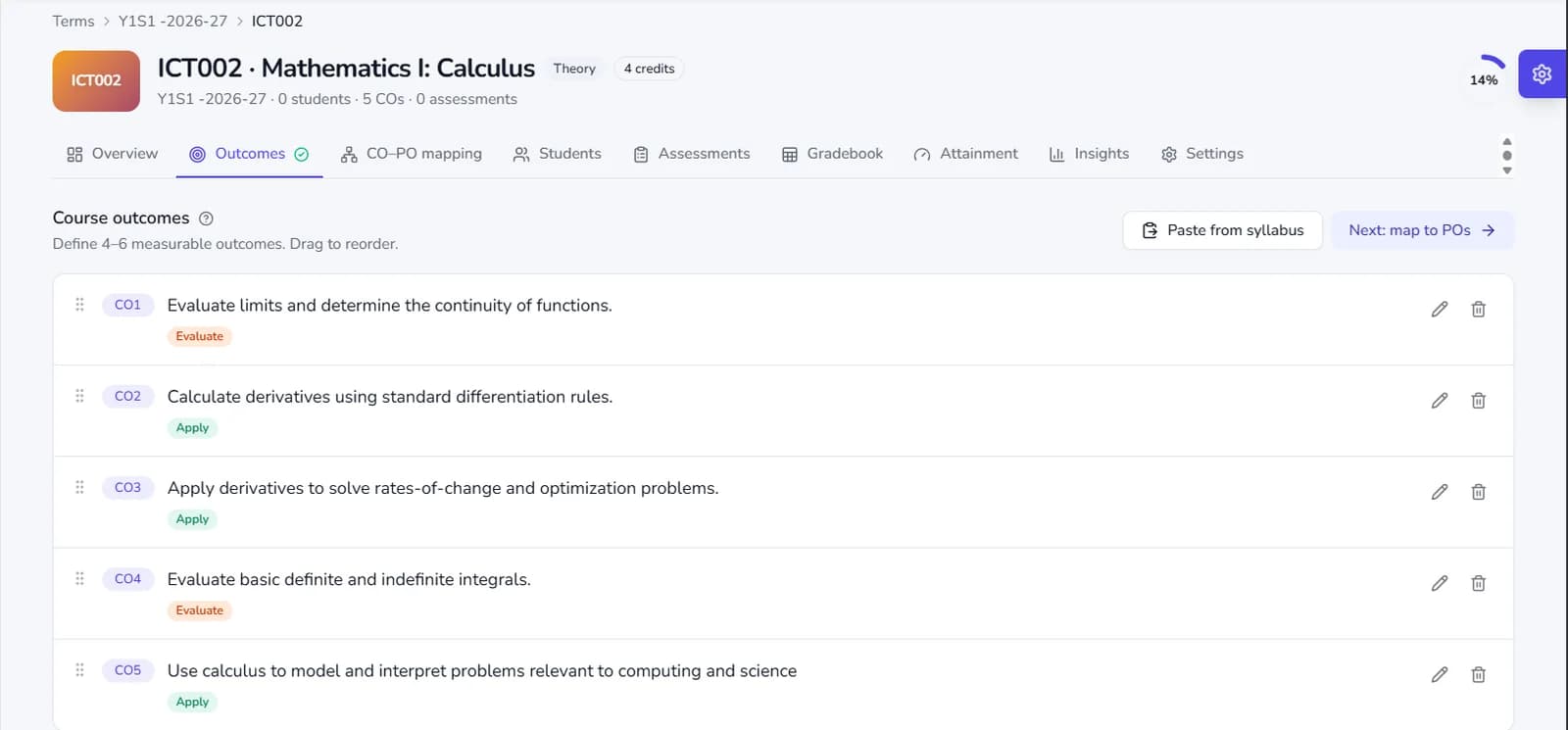
- Outcome: what can the learner do by the end of the course?
- Evidence: what task will show that the learner can do it?
- Improvement: what will we change when the evidence shows a gap?
These summaries simplify the originals. Always confirm requirements against the latest CHED issuances and your program’s PSG. For infographics, a myths-and-facts list and a glossary, read the full guide: CHED’s OBE policies, explained simply.